Quick Answer: Published 2026 benchmarks vary by market and project, but common commercial ranges for professional ecommerce work are roughly $25 to $75 per simple white-background image, while lifestyle or styled product images range from $75 to $300+ per image. Commercial day rates typically fall between $500 and $3,000 per day, with higher figures for complex productions involving talent, locations, and high-end retouching.
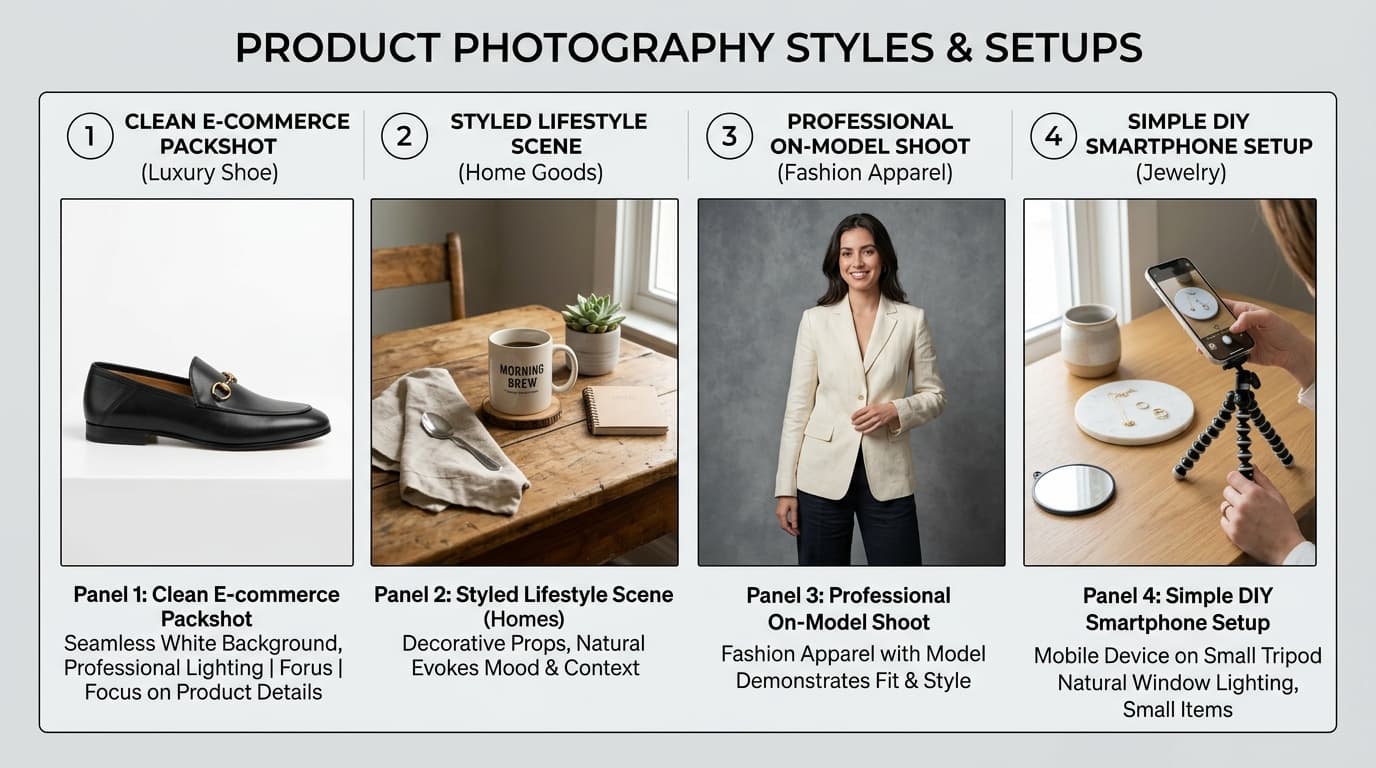
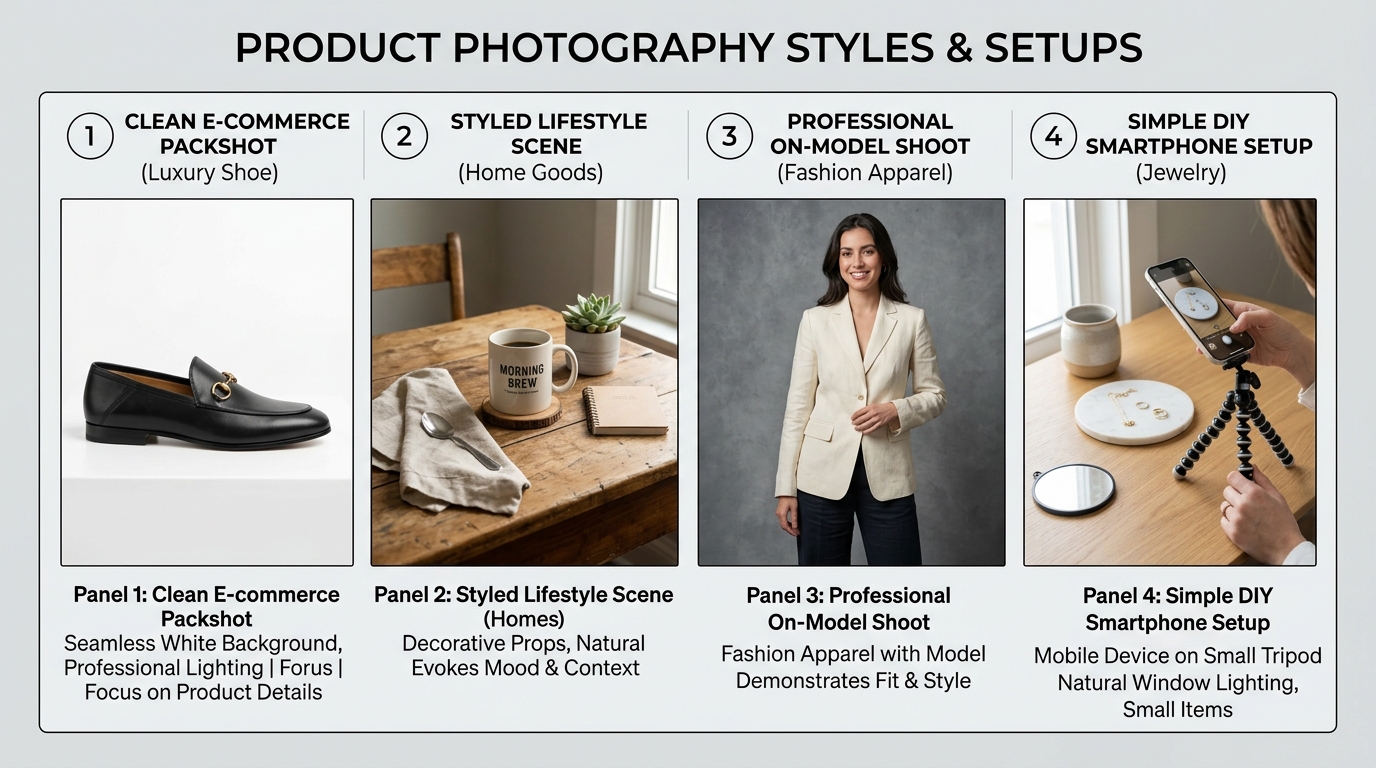 Different product photography setups: white background, styled scene, on-model shot and DIY phone setup
The first thing to understand is that there is no single universal product photography cost in 2026. A solo online store might spend almost nothing by shooting with a smartphone next to a bright window. An established fashion brand can easily spend $5,000 to $12,000 on a single campaign once models, hair and makeup, studio rentals, art direction, and retouching are factored in. Both approaches can make perfect financial sense depending on the business model.
That is why the most useful question is not merely "How much does one photo cost?" It is: What specific visual assets does my customer need to see, across how many products, and what is included in the quote?
What actually determines product photography cost?
The camera equipment is only a small portion of the overall bill. Most of the cost comes from everything surrounding the camera: preparing the physical samples, building and painting the set, lighting the composition, styling the props, capturing multiple angles, editing the RAW files, and formatting them for online publishing.
A clean bottle shot on pure white can be fast. A silk evening dress on an agency model in a boutique hotel suite is not. A reflective luxury watch can be significantly harder than both because the photographer must control the reflections of the entire room, not just the watch itself.
The five primary drivers of commercial pricing:
- Type of imagery: Simple white-background packshot vs. prop-styled tabletop vs. on-model lifestyle.
- Catalog size (SKU count): 10 items vs. 200 items.
- Number of final views per product: 1 hero angle vs. 5 detailed angles (front, back, side, macro detail, scale reference).
- Level of styling and production: Steamers, model casting, location permits, props, set construction.
- Post-production depth: Basic dust removal and clipping path vs. high-end composite editing and color matching.
Typical 2026 product photography pricing benchmarks
| Type of Photography | Common 2026 Price Benchmark | Primary Cost Drivers |
|---|---|---|
| Simple White-Background E-commerce | $25 – $75 per finished image | Production speed, volume, basic clipping path, color correction |
| Styled / Lifestyle Tabletop Imagery | $75 – $300+ per image | Prop sourcing, set dressing, specialized lighting, advanced retouching |
| Full E-commerce Studio Day Rate | $500 – $3,000 per day | Studio space, photographer, lighting crew, number of setup shifts |
| DIY / In-House Shooting | Low direct cash cost | Staff labor time, equipment purchase, steep learning curve |
Note: These figures represent industry benchmarks. Leading commerce platforms cite roughly $500–$3,000 per day and $50–$350 per image across general commercial photography, while streamlined high-volume studios quote white-background packshots closer to $25–$75 per photo. The spread exists because "product photography" covers vastly different assignments.
Per image, per product, or per day: what does the quote mean?
Two different photography studios can quote the exact same project with completely different billing structures. Before evaluating proposals, always translate quotes into the same unit of measure.
1. Per image pricing
You pay strictly for each delivered, finished image. This model is ideal when different products require varying numbers of views (e.g., a simple t-shirt needs two shots, while a multi-pocket backpack needs six).
Crucial check: Ask what "finished" includes. Verify whether basic retouching, clipping paths, color matching, and revisions are bundled or billed as add-ons.
2. Per product pricing
A studio might charge a flat package rate—for instance, "$90 per SKU, including front, back, and close-up detail." In this case, one product costs $90 for three images, making your effective cost $30 per finished image. This model provides predictable forecasting for large catalog drops.
3. Day rate pricing
Day rates make financial sense when a shoot is logistically complex or when you have a high volume of organized products ready to shoot back-to-back.
The risk: The final number of delivered images is less guaranteed. A day rate can yield exceptional value for a standardized apparel drop, but become expensive if fragile products require constant lighting and set overhauls.
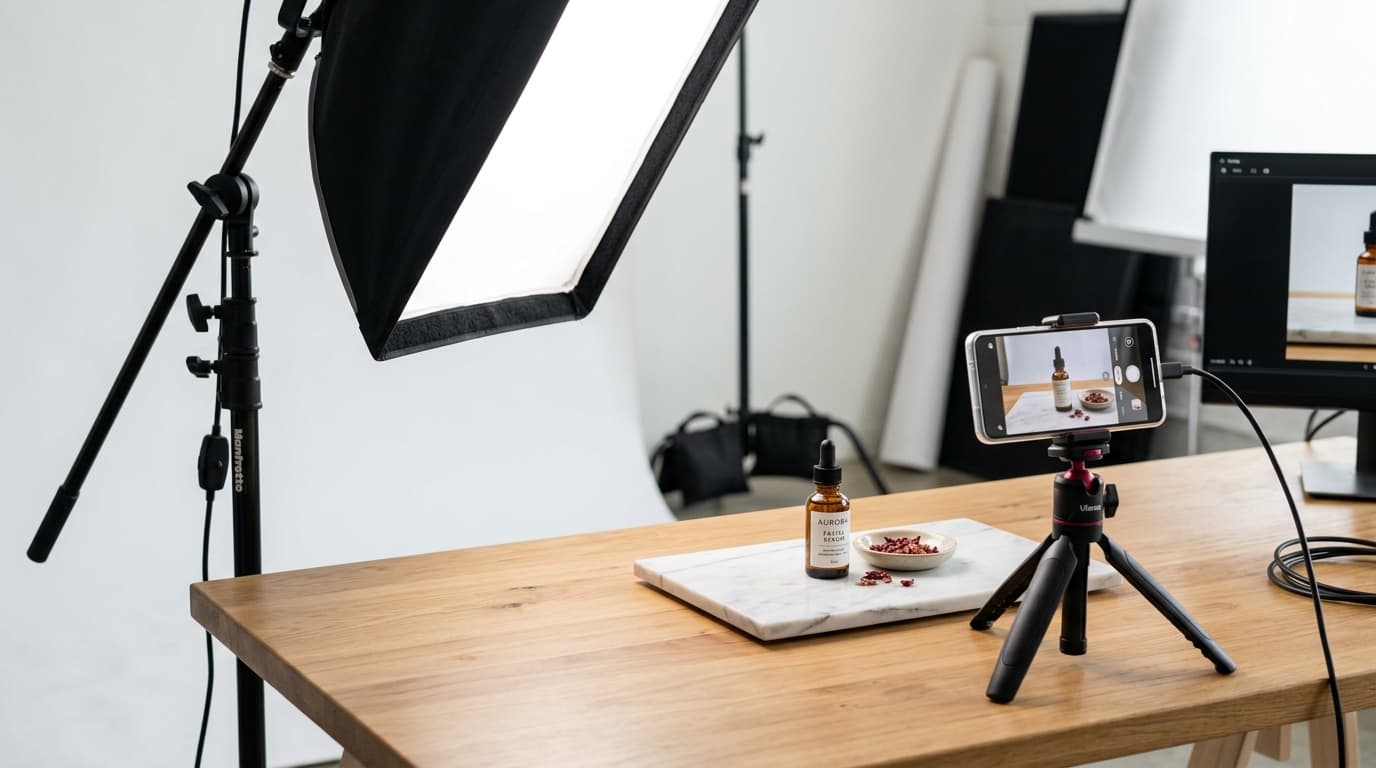
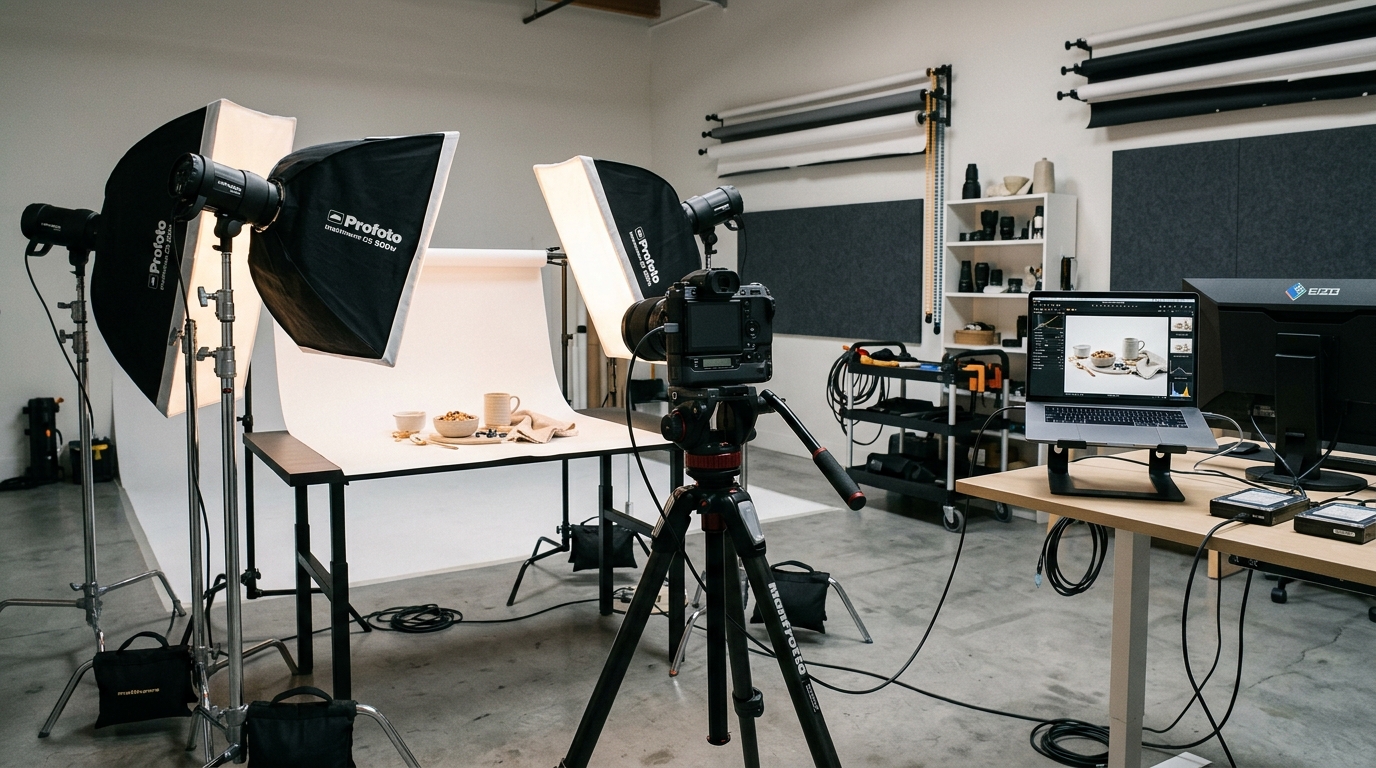 Professional product photography studio with lighting, camera and styling props
How much should you budget for a small ecommerce catalog?
Here is a practical budgeting formula for e-commerce planning:
Example A: A 10-product drop (3 images per SKU = 30 final images)
- At $25–$75 per clean white-background image, the shoot lands between $750 and $2,250.
- If you upgrade to custom styled lifestyle scenes or on-model photography ($75–$250/image), the budget increases to $2,250–$7,500.
Example B: A 50-product catalog (3 images per SKU = 150 final images)
- At $25–$75 per image, standard studio production lands between $3,750 and $11,250.
- At this scale, volume discounts, standardized lighting sets, and streamlined digital workflows become vital to preserving operating margins.
The hidden costs people forget to ask about
The initial headline quote is rarely the final invoice total. Before signing a production agreement, confirm whether these 7 common line items are included:
- Styling and preparation: Garment steaming, ironing, shoe polishing, unpacking, and set dressing.
- Models and talent fees: Agency day rates, usage rights, hair styling, and makeup artists ($800–$2,500+/day).
- Studio and location rental: Dedicated studio space fees, outdoor location permits, and travel expenses.
- Advanced retouching: Cleaning up specular reflections on polished chrome, transparent glass, or textured leather.
- Shipping and product handling: Inbound freight, insurance, unboxing, repacking, and return shipping.
- Rush delivery surcharges: Express turnaround (within 48 to 72 hours) typically adds a 10% to 30% premium.
- Commercial licensing & usage rights: Digital web usage is standard, but broadcast advertising, billboards, or global print campaigns often incur licensing buyout fees.
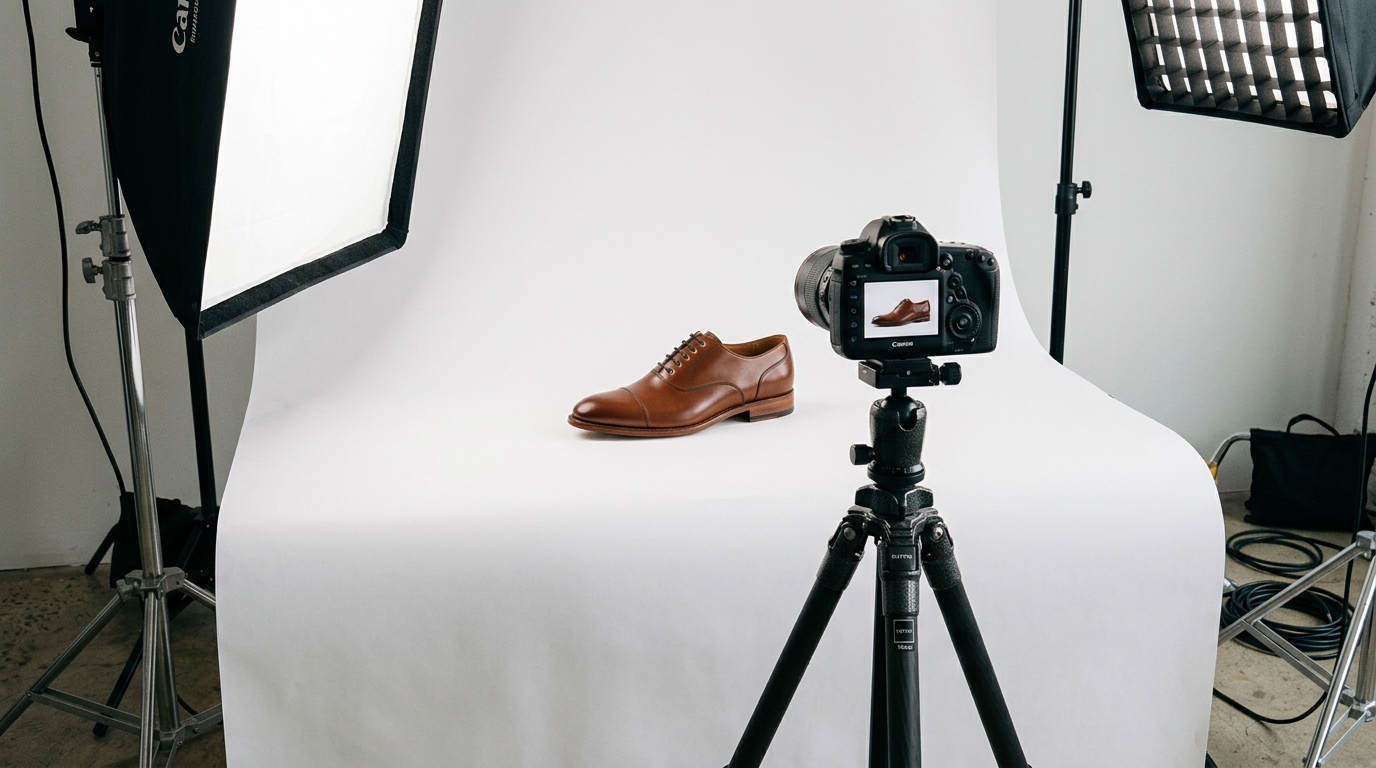 White background product photography setup with a shoe on seamless paper
Why some products cost more to photograph
Different product materials behave very differently under studio lights:
- Reflective products (Jewelry & Watches): The photographer is really photographing the reflections around the object. Controlling glare demands diffusion tents, polarizing filters, and meticulous macro retouching. (See our guide on How to Photograph Jewelry Without a Macro Lens).
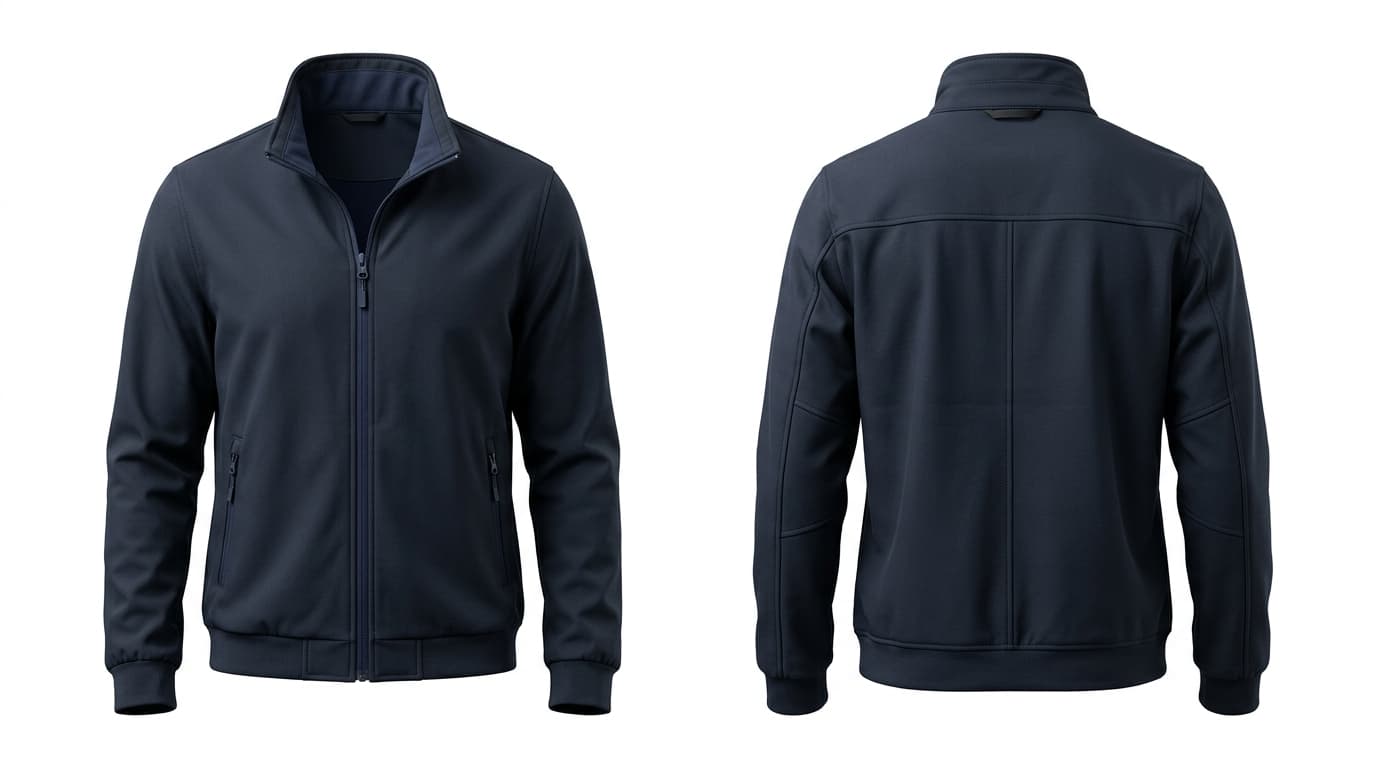
- Apparel and clothing: Fabrics wrinkle in transit and require steaming, pinning, styling, or specialized Ghost Mannequin rigging.
- Glassware and transparent liquids: Bottles and cosmetics require precise backlight rim illumination so liquids look vibrant rather than muddy.
- Oversized goods: Furniture and large appliances require freight shipping, large cyclorama studio spaces, and multi-person grip crews.
Can you reduce product photography cost by doing it yourself?
Yes. For an early-stage store or testing new products, DIY is often the most sensible starting strategy. A modern smartphone, a sturdy mini tripod, and bright, diffused window light can produce clean, usable e-commerce images at virtually zero initial cash outlay. (Learn how in our Product Photography Lighting Guide).
The hidden trade-off: your time
What founders underestimate is the labor hours required. You still have to unpack each item, clean it, frame the shot, capture several takes, color-correct the RAW files, remove backgrounds, crop to square, and upload them to your store.
Multiply that manual process by 50 or 100 SKUs, and a "free" DIY shoot carries a substantial operational labor cost.
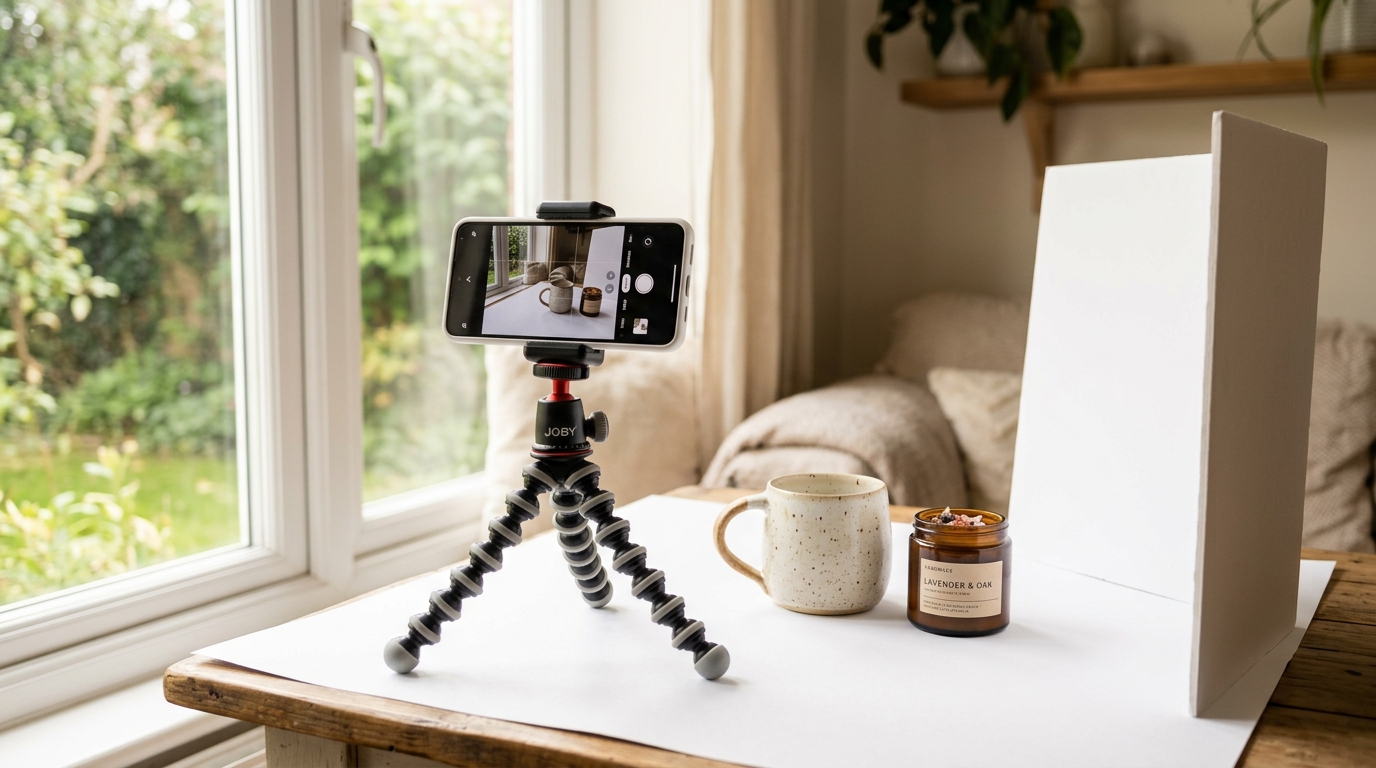 DIY product photography with a smartphone, white background and natural window light
When lifestyle and on-model photography changes the budget
This is where photography transitions from simple asset creation into a full commercial production. A single on-model lifestyle photo requires talent casting, styling, wardrobe coordination, and location management.
However, the commercial value is also fundamentally different:
- A clean packshot answers: "What does the physical item look like?"
- An on-model lifestyle photo answers: "How does this look when worn? How does it fit my lifestyle?"
High-converting storefronts rarely choose between the two—they use clean product shots for primary catalog clarity and on-model imagery to evoke emotional desire. (For apparel framing techniques, read our AI Fashion Model Generators Guide and Earrings on Models Guide).
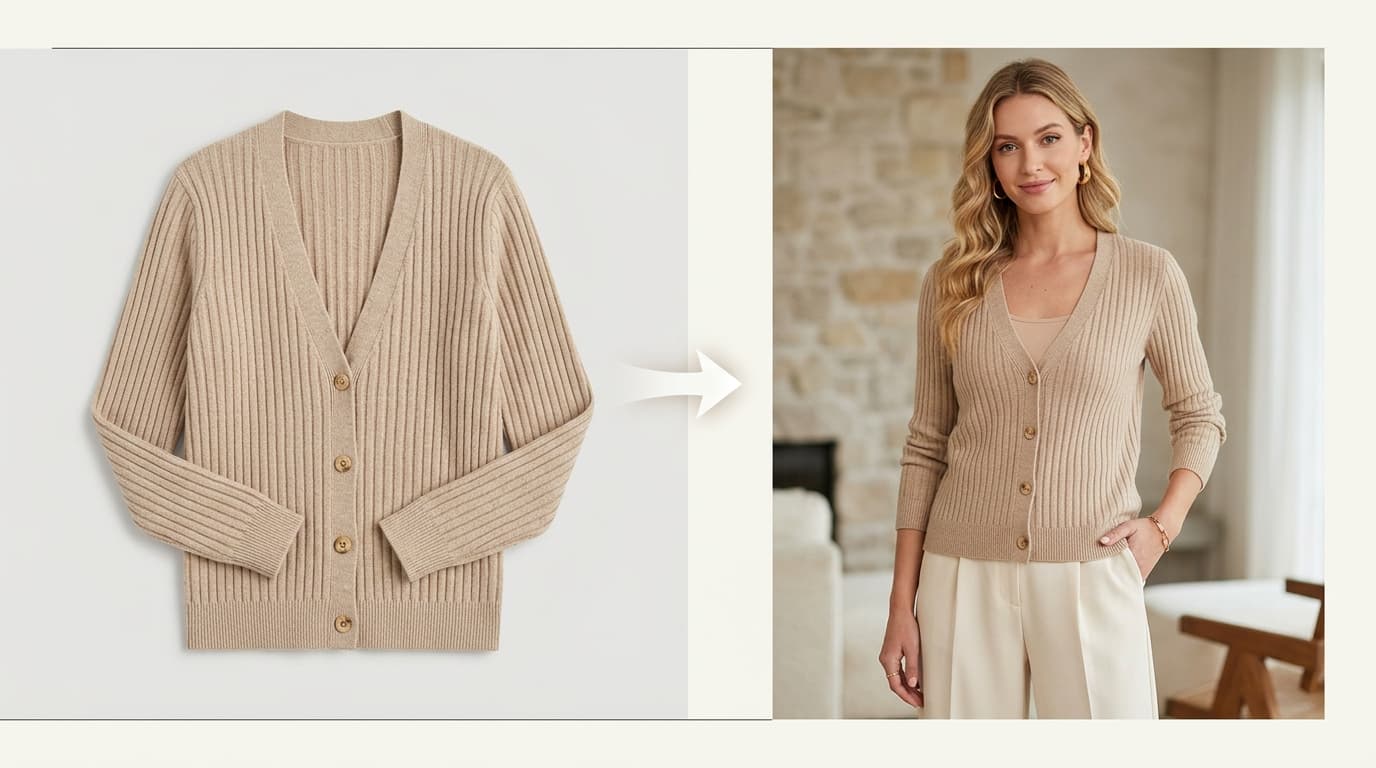
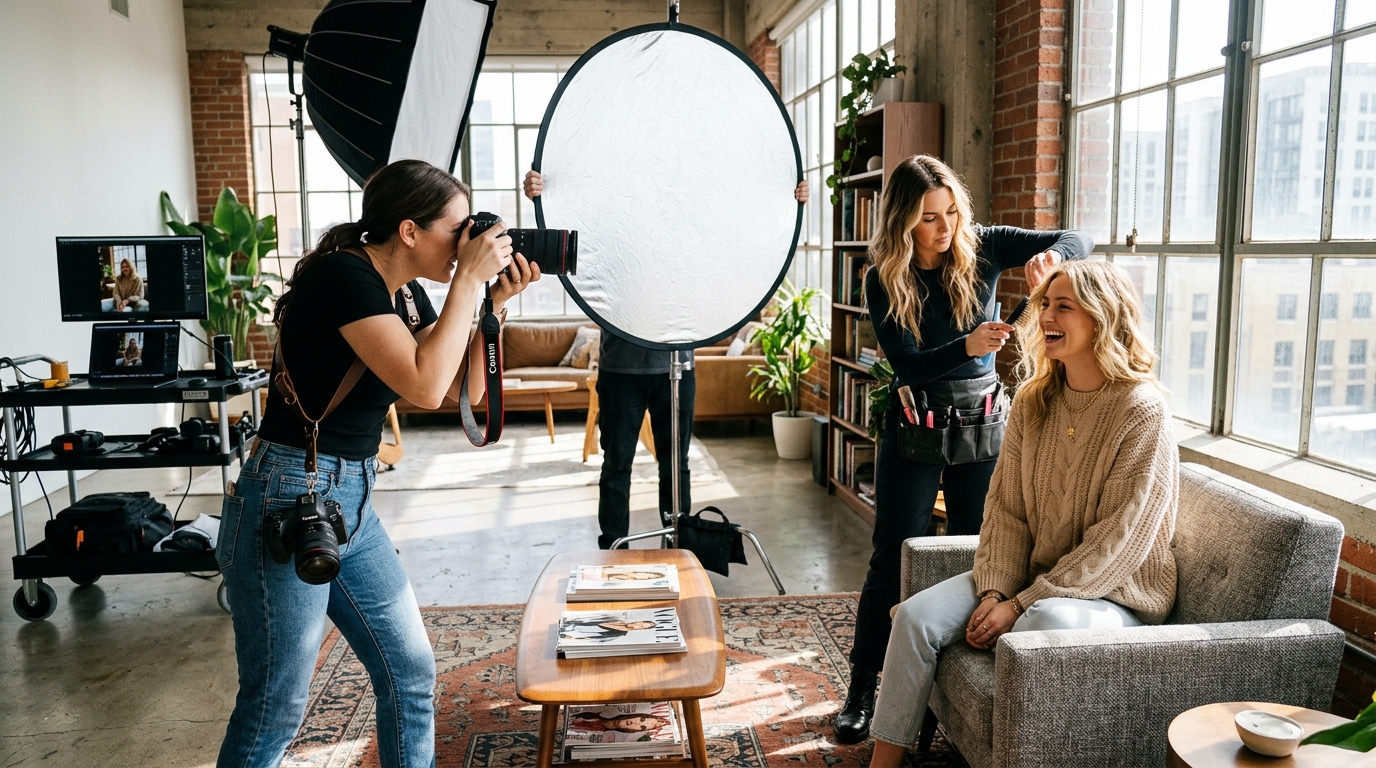 Photographer shooting a model wearing a knit sweater in a bright lifestyle setting
A better way to budget your next shoot
Instead of starting with an arbitrary figure like "I have $2,000 to spend," build your budget from the catalog up:
- Count the active SKUs: List the exact number of products that require photography.
- Determine minimum viable views: Most products only need 2 to 4 purposeful shots (hero front, side/back angle, detail close-up, and scale reference).
- Separate "must-have" from "nice-to-have": Standard white-background shots are essential; ten creative lifestyle variations are optional.
- Standardize setups across categories: Keeping lighting, backgrounds, and camera heights consistent dramatically lowers production time and studio quotes.
- Evaluate total project scope: Always compare complete proposals that bundle shooting, editing, licensing, and delivery revisions.
Where AI-assisted product photography fits in 2026
Artificial intelligence is not replacing every physical photoshoot, but it is fundamentally transforming the economics of commercial visual production.
Once you have a single clean, high-resolution source photo of your product, AI-assisted tools can generate:
- Diverse, photo-realistic lifestyle scenes without booking locations.
- On-model imagery across various demographics and skin tones without casting calls.
- Rapid seasonal campaign variations without rebuilding physical sets.
Quality Rule: The product in the AI-generated scene must look identical to the real physical product in your warehouse. A stunning image is worthless if it misrepresents color, proportions, logo placement, or fabric weave.
Using Shotinger Product Studio, Apparel Studio, and Jewelry & Accessories, brands can convert a single physical product photo into an entire commercial image library at a fraction of traditional production costs.
So, what should you expect to pay?
- For simple e-commerce packshots: Plan around $25–$75 per finished image as a reliable benchmark.
- For styled lifestyle and on-model imagery: Expect $75–$300+ per image.
- For full-day commercial studio productions: Budget between $500 and $3,000+ per day, depending on market, crew size, and talent requirements.
The smartest budget is not necessarily the cheapest one. It is the budget that produces the exact visual information your customers need to make a confident purchase, without paying for unnecessary production overhead.
Frequently asked questions
How much does product photography cost per photo?
In 2026, a standard white-background e-commerce image typically costs between $25 and $75 per finished photo. Styled tabletop images, macro jewelry shots, and on-model fashion imagery generally range from $75 to $300+ per image.
Is product photography cheaper per product or per image?
Neither model is universally cheaper. A per-product quote is advantageous when each SKU receives a standardized package of 3 to 4 views. Always calculate your effective cost per delivered image before comparing quotes.
How much does a 10-product shoot cost?
For 10 products requiring 3 finished images each (30 total images), standard e-commerce studio photography typically costs between $750 and $2,250. Adding models, custom locations, or complex styling will increase that total.
Can I photograph products with a smartphone?
Yes. Modern smartphones equipped with optical zoom lenses, paired with a mini tripod and diffused window light, can produce commercial-grade product photos for new and growing e-commerce stores.
Does AI product photography reduce costs?
Yes. By using clean source photos to generate on-model variations, lifestyle backgrounds, and seasonal scenes, brands can reduce recurring production and studio costs by up to 70–90%.
Ready to scale your product photography without traditional studio costs?
Turn your product photos into commercial studio, on-model, and lifestyle imagery in seconds with Shotinger.
Explore Shotinger Product Studio →
Start creating campaign-ready product visuals
Transform flat lays, packshots, and jewelry photos into photorealistic on-model imagery in under 60 seconds.